Cutebarbie Regular: A Font That Feels Like a Handmade Hug
You know that feeling when you find a design element that just clicks? It's not just about how it looks, but the personality it brings to a project. That’s the experience with Cutebarbie Regular. It’s a display font that doesn’t sit quietly on the page; it bounces, it plays, and it immediately communicates a sense of joyful, handmade charm. For designers and creators, finding a typeface with this much built-in character can be a game-changer, especially when you're aiming to connect with an audience that appreciates warmth and whimsy.
Understanding the Playful Anatomy of This Type
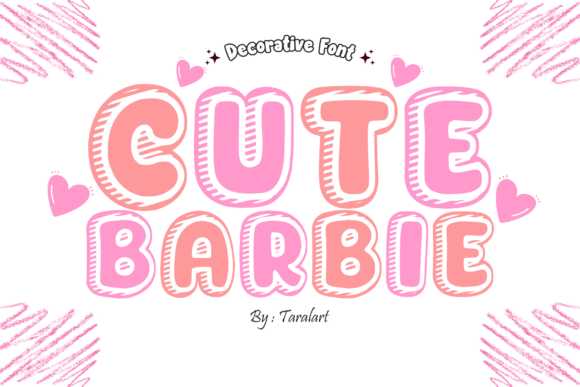
At first glance, Cutebarbie Regular is bold and soft. The letterforms are thick and rounded, giving them a substantial presence, but they’re enclosed in a gentle, playful outline that keeps the look friendly rather than aggressive. The real magic, however, is in the details. Look closely at the interior of each character, and you’ll see light, irregular lines that mimic the texture of crayon scribbles. This subtle, tactile quality is what sets it apart from other display fonts. It adds a layer of handcrafted authenticity that digital designs often lack.
The uppercase letters and numbers have a bouncy, slightly irregular rhythm. They don't sit in a perfect, rigid line. Instead, they feel energetic and spontaneous, as if they were quickly sketched by an enthusiastic hand. This inherent movement makes it ideal for projects that need to convey excitement, youthfulness, and a personal touch. It’s a creative font that does a lot of the heavy lifting for you, injecting personality into headlines, logos, and branding materials without needing complex design work.
Where Does a Font Like This Shine? Real-World Applications
The true test of any design asset is its versatility. Cutebarbie Regular thrives in environments where a friendly, expressive tone is key. Its candy-colored palette potential makes it a natural fit for a wide array of projects.
- Branding & Logo Design: For businesses targeting a younger demographic or those in creative fields, this font can form the core of a memorable brand identity. Think children's boutiques, party planners, craft supply stores, or a bakery specializing in whimsical cupcakes. It instantly communicates what the brand is about.
- Packaging Design: On shelf or online, packaging needs to grab attention fast. This display typeface is perfect for product names on toy boxes, candy wrappers, or girly cosmetic items. Its bold outline ensures legibility even at smaller sizes, while its texture adds a tactile quality to printed labels.
- Invitations & Greeting Cards: Birthday party invites, baby shower announcements, or cheerful thank-you cards are its natural habitat. It sets a celebratory mood from the very first word.
- Social Media Graphics & Websites: In the fast-scrolling world of Instagram or Pinterest, a standout font can make a post stop-worthy. Use it for quote graphics, sale announcements, or blog post titles to inject energy. For web design, it works brilliantly for hero text or section headers, paired with a clean sans serif font for body copy.
- Print Materials & Merchandise: From posters for a school event to the front of a child's t-shirt or a line of stickers, its joyful personality translates perfectly to physical products.
Making It Work: Practical Tips for Designers and Creators
Having a great font is one thing; using it effectively is another. Here’s how to integrate Cutebarbie Regular into your workflow for maximum impact.
Font Pairing is Everything. A strong font pairing creates hierarchy and ensures readability. Since Cutebarbie is a high-personality display font, balance it with something simple and neutral. A clean sans serif font like Open Sans or Lato for body text is a classic, foolproof combination. For a different feel, a simple, understated serif font could also work. Avoid pairing it with other ornate script fonts or handwritten fonts, as they will compete for attention and create visual chaos.
Readability First. Its bouncy forms make it perfect for short bursts of text—headlines, logos, buttons, and pull quotes. It is not designed for long paragraphs. Using it for body copy would tire the reader's eye. Always prioritize the reading experience; the font’s charm should enhance, not hinder, the message.
Test Across Contexts. Before finalizing a design, see how the font renders in its intended environment. Check how it looks in a small social media icon, on a mobile screen, and in a large printed poster. This helps you catch any legibility issues early.
License with Confidence. For any commercial project—from client work to selling merchandise—it's crucial to ensure you have the correct commercial license. This protects you legally and supports the font designer's work. Most premium font licenses are straightforward and allow for broad use.
Beyond the Obvious: Unexpected Places for Whimsy
Don’t limit your thinking to the usual suspects. A typeface like this can add unexpected delight to more serious contexts when used strategically. Imagine a financial app for teens using it for notifications, or a nonprofit’s annual report using it for a section on community impact, instantly making the content more approachable. In editorial design, it can create captivating chapter titles or section breaks in a lifestyle magazine. The key is to use it as a strategic accent to inject personality where it’s needed most.
In the end, choosing a font is a decision about voice and connection. Cutebarbie Regular offers a voice that is unmistakably cheerful, creative, and handmade. It’s a tool for anyone—from the small business owner crafting their first logo to the content creator looking to build a cohesive visual brand—who wants to communicate with a sense of fun and authenticity. It’s more than just a set of letters; it’s a design shortcut to creating an emotional response.